Mince Pies and the £150 Rule: What Your Christmas Do Really Costs the Business
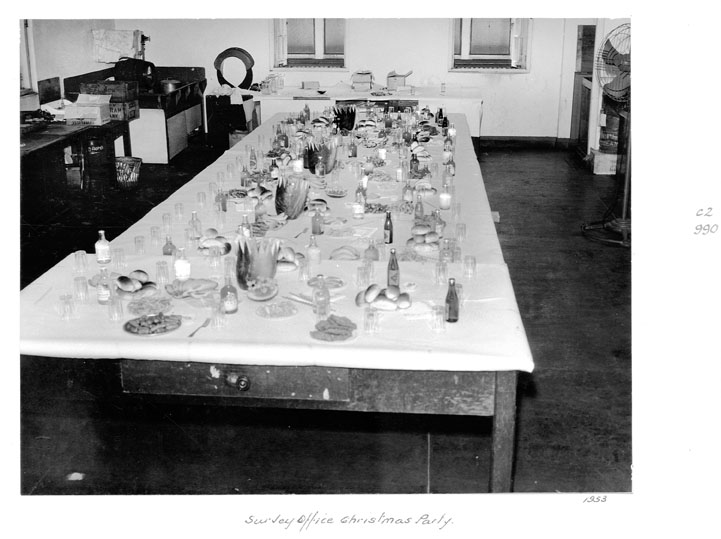
Photo: Lands Department, Survey Office, Cartographic Branch, Photographic Section, Public domain, via Wikimedia Commons
Every December the same question lands in the inbox: can we put the Christmas meal through the business? The answer is usually yes — but it's a yes with a specific shape, and the shape matters more than most people expect.
Here's the version you can act on without wading through HMRC's own guidance at 11pm.
The rule, in one paragraph
There's a tax exemption for an annual staff party or similar event costing up to £150 per head. Stay within it and there's no benefit-in-kind to report, no extra tax for your team and no Class 1A National Insurance for you. The figure includes VAT, and it's per head across everyone who attends.
Crucially, it isn't an allowance you can chip into. Spend £150 per head and you're fine. Spend £151 and the entire cost becomes a taxable benefit, not just the £1 over. That cliff edge is the single most important thing to understand, so build in a bit of headroom rather than aiming for exactly £150.
The event also has to be genuinely annual — a Christmas do, a summer barbecue, a yearly team away day. A one-off leaving party or a random Friday lunch doesn't qualify.
Who counts in the headcount
This is where most well-meaning calculations go wrong. The £150 is worked out by dividing the total cost of the event by the total number of people there — including guests who don't work for you.
So if your team of eight each brings a partner, you've got sixteen heads. A £2,400 bill is £150 a head. The same bill split across eight employees only would look like £300 and blow the exemption entirely.
A few specifics:
- Directors count as employees, including in a one-person limited company. If you're the only attendee, you're the headcount.
- Partners and spouses attending as guests count towards the headcount, and their share is treated as a benefit to the employee — but if the overall cost per head stays within £150, there's nothing to report.
- Former employees who've left during the year can usually be included if they're genuinely part of the annual event. Ask your accountant if it's borderline.
- Freelancers and contractors aren't employees. If you're paying for them, that's entertaining of non-employees, which is treated differently — see below.
What goes into the £150
Be thorough, because HMRC looks at the total cost per head, not just the food.
- the meal itself, including drinks
- venue hire or room fees
- entertainment — the DJ, the quiz, the magician
- transport you lay on, such as a minibus or taxis home
- an overnight stay, if you're providing one
If you're handing out gifts or awards on the night, treat those separately — they're not party costs, and the trivial benefits rules apply to small gifts instead.
Two events, one limit
If you run a summer barbecue and a Christmas dinner, both can be exempt — but only if their combined cost per head comes to £150 or less. If the summer do already used £100 a head, your Christmas budget is £50 a head, not £150.
This catches people out every year, so dig out what the summer event actually cost before you sign anything for December.
If you do go over
It's not the end of the world, it's just paperwork. The full cost becomes a benefit in kind. You have two usual routes:
- Report it on a P11D for each employee and pay Class 1A National Insurance on the value. For a party held in December 2026, that falls in the 2026/27 tax year — P11D deadline is 6 July 2027, with Class 1A due by 22 July (19 July if you pay by post).
- Set up a PAYE Settlement Agreement so the business covers the tax on the employees' behalf. Popular for staff entertaining because it keeps the perk off individual tax codes. You'll need to agree this with HMRC, so it's worth sorting in advance rather than in a panic in June.
Client entertaining is a different animal
This is the bit that trips up owners who mix the two. Staff entertaining is a legitimate business expense, and you can reclaim the VAT on it.
Client entertaining is not. It isn't allowable for corporation tax, and the VAT isn't recoverable. Same restaurant, same receipt, completely different treatment. If the Christmas meal is a mix of team and clients, split the bill on paper.
Sole traders and partnerships
If you're a sole trader or in a partnership, your own meal isn't an allowable deduction — you can't entertain yourself for tax purposes. The exemption works properly once you have employees, where their share of a qualifying annual event is fine. It's a common source of confusion, and one worth a two-minute call with your accountant if you operate as a partnership with staff.
The record-keeping checklist
None of this needs to be complicated. A single folder per tax year, containing:
- the itemised invoice in the business name, showing the VAT separately
- the date of the event
- an attendee list, marked employee or guest
- your cost-per-head calculation, written down rather than kept in your head
- a copy of the invitation email showing the event was open to all staff
- any transport or accommodation receipts
That last one about the invitation matters more than it sounds. The exemption requires the event to be open to all employees — or all employees at a particular location, if you have several sites. A quick email that says 'everyone's welcome' is decent evidence if questions ever arise.
Book it, keep the receipt, enjoy it
A staff Christmas do is one of the few perks that's genuinely tax-friendly, provided the numbers are checked before the deposit goes down rather than after. Work out the per-head cost including guests, keep it comfortably under the threshold, and file the invoice with the attendee list attached.
Then go and enjoy the mince pies. The admin is already done.